As enterprises scale AI, a significant portion of spend is lost to inefficiency: unused GPU capacity, misaligned orchestration, and uncontrolled model and token usage. Without economic visibility, AI investment becomes recurring financial loss. Pillar Economics Group restores control by making AI costs measurable, attributable, and optimizable.
As enterprises scale AI, a significant portion of spend is lost to inefficiency: unused GPU capacity, misaligned orchestration, and uncontrolled model and token usage. Without economic visibility, AI investment becomes recurring financial loss. Pillar Economics Group restores control by making AI costs measurable, attributable, and optimizable.

ABOUT
Economic foundations for enterprise AI.
Pillar Economics Group is built on a simple belief: AI cannot scale sustainably without economic clarity. As enterprises deploy GPUs, models, and LLM-driven systems at scale, financial control has lagged behind technical progress. We exist to close that gap.
Our work focuses on the economics beneath modern AI infrastructure—how costs are created, how value leaks through inefficiency, and how organizations regain control without slowing innovation. We combine financial rigor with deep technical understanding to make AI spend measurable, attributable, and optimizable.
We help enterprises turn AI from an unpredictable expense into a disciplined, long-term investment.
Pillar Economics Group is built on a simple belief: AI cannot scale sustainably without economic clarity. As enterprises deploy GPUs, models, and LLM-driven systems at scale, financial control has lagged behind technical progress. We exist to close that gap.
Our work focuses on the economics beneath modern AI infrastructure—how costs are created, how value leaks through inefficiency, and how organizations regain control without slowing innovation. We combine financial rigor with deep technical understanding to make AI spend measurable, attributable, and optimizable.
We help enterprises turn AI from an unpredictable expense into a disciplined, long-term investment.
Upto 60%*
AI Bill reduction
Tracks hidden losses uncovered across GPUs, inference, and token usage.
Upto 60%*
AI Bill reduction
Tracks hidden losses uncovered across GPUs, inference, and token usage.
170+
Long-Term Partners
Across medium and enterprise sized AI-First companies
170+
Long-Term Partners
Across medium and enterprise sized AI-First companies
85%
Repeat Clients
Clients see constant low AI bills after our assessment
85%
Repeat Clients
Clients see constant low AI bills after our assessment
12m
Predictibility Horizon
Forward-looking AI spend forecasting and budget control.
12m
Predictibility Horizon
Forward-looking AI spend forecasting and budget control.
One Platform Does It All.
Assess, Forecast, and implement changes in Infrastructure in Real Time to reduce AI Costs.
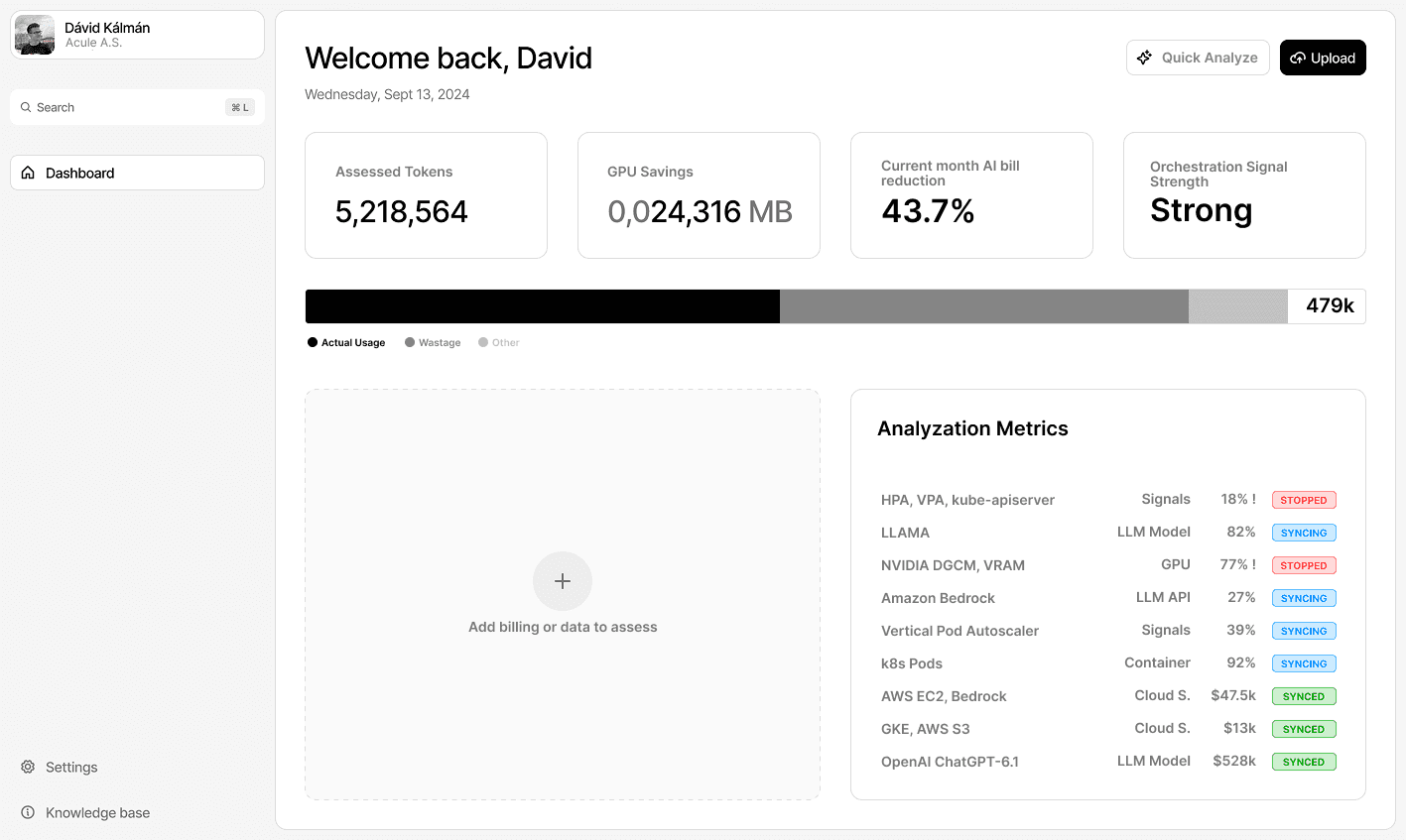
One Platform Does It All.
Assess, Forecast, and implement changes in Infrastructure in Real Time to reduce AI Costs.
CLIENTS
Trusted by enterprises scaling AI responsibly.
Pillar Economics Group works with organizations where AI is already material to the business—and where uncontrolled costs pose real financial and operational risk. Our clients include enterprises running large-scale AI infrastructure, platform teams supporting multiple business units, and leadership teams accountable for AI ROI.
Pillar Economics Group works with organizations where AI is already material to the business—and where uncontrolled costs pose real financial and operational risk. Our clients include enterprises running large-scale AI infrastructure, platform teams supporting multiple business units, and leadership teams accountable for AI ROI.
“Pillar helped us uncover AI cost leakage we didn’t know existed. More importantly, they translated technical behavior into financial insight our leadership could act on. Their work gave us confidence to continue scaling AI without increasing financial risk.”
Rahul Ghai
Chief Vice President, GE Aerospace
“Pillar helped us uncover AI cost leakage we didn’t know existed. More importantly, they translated technical behavior into financial insight our leadership could act on. Their work gave us confidence to continue scaling AI without increasing financial risk.”
Rahul Ghai
Chief Vice President, GE Aerospace
“They understand how AI systems actually run and not just how they’re billed. Pillar connected GPU utilization, model behavior, and orchestration decisions directly to cost. The result was a clear, prioritized roadmap we could execute without disrupting teams.”
Jenny A.H.
CFO, Investor AB
“They understand how AI systems actually run and not just how they’re billed. Pillar connected GPU utilization, model behavior, and orchestration decisions directly to cost. The result was a clear, prioritized roadmap we could execute without disrupting teams.”
Jenny A.H.
CFO, Investor AB
We answer the questions that matter most.
FAQ
FAQ
These FAQs explain how Pillar Economics Group brings economic discipline to enterprise AI. They outline our approach, scope, and outcomes so leaders can clearly assess how we help organizations control AI spend at scale.
What problem does Pillar Economics Group actually solve?
Pillar Economics Group helps enterprises regain control over AI spending that has become opaque, fragmented, and difficult to justify. As AI systems scale across GPUs, Kubernetes, models, and LLM APIs, costs no longer map cleanly to teams, products, or business value. Traditional financial and cloud cost tools can show totals, but they cannot explain why money is being spent or which technical decisions are driving it. Pillar addresses this gap by making the economics of AI systems understandable, measurable, and governable at an enterprise level.
How is this different from traditional FinOps or cloud cost tools?
Traditional FinOps tools were designed for predictable infrastructure and static workloads. AI behaves differently. Shared GPUs, dynamic inference traffic, VRAM constraints, and token-based pricing introduce economic behavior that standard tools cannot interpret. Pillar is purpose-built for this reality. Instead of treating AI as another line item on a cloud bill, we analyze how AI workloads actually run and translate that behavior into financial insight that both finance and engineering teams can act on.
What data does Pillar analyze?
Pillar works with the data enterprises already generate while running AI in production. This includes cloud billing data, Kubernetes and orchestration signals, GPU utilization and scheduling behavior, model deployment metadata, inference and training workloads, and LLM API usage. The value lies not in collecting more data, but in correlating these sources into a single economic view that explains how AI systems consume resources and create cost.
What outcomes should enterprises expect?
Enterprises gain clear visibility into where AI money is going, which workloads or teams are responsible, and where spend is turning into financial loss. We identify hidden cost leakage that often goes unnoticed, such as idle GPU capacity, inefficient scheduling, over-provisioned inference, and unmanaged token usage. Most importantly, clients receive a practical, prioritized roadmap that enables better forecasting, cost control, and long-term governance without slowing AI development.
Is Pillar a software platform, a consulting firm, or both?
Pillar Economics Group combines structured technology with expert-led analysis. AI economics is still an emerging discipline, and dashboards alone are not enough to drive good decisions. Our approach blends a unified cost intelligence layer with financial and technical judgment to ensure insights are accurate, relevant, and actionable. We do not sell infrastructure, cloud services, or vendor commitments, which keeps our recommendations independent and aligned with client outcomes.
Who inside an organization typically engages with Pillar?
Pillar engagements usually involve finance leaders, technology executives, AI platform owners, and engineering teams. One of our core roles is creating a shared economic language between finance and engineering. By aligning these groups around a common understanding of AI costs, organizations are able to make faster, more confident decisions about scaling, optimization, and investment.
When is the right time to work with Pillar Economics Group?
Pillar is most valuable when AI spend is already significant or is expected to grow rapidly. Organizations often reach out when GPU and LLM costs begin rising faster than expected, forecasting becomes unreliable, or leadership asks for clearer justification of AI investment. If AI is becoming central to your business strategy, establishing economic discipline early prevents waste, friction, and loss of trust later.
What problem does Pillar Economics Group actually solve?
Pillar Economics Group helps enterprises regain control over AI spending that has become opaque, fragmented, and difficult to justify. As AI systems scale across GPUs, Kubernetes, models, and LLM APIs, costs no longer map cleanly to teams, products, or business value. Traditional financial and cloud cost tools can show totals, but they cannot explain why money is being spent or which technical decisions are driving it. Pillar addresses this gap by making the economics of AI systems understandable, measurable, and governable at an enterprise level.
How is this different from traditional FinOps or cloud cost tools?
Traditional FinOps tools were designed for predictable infrastructure and static workloads. AI behaves differently. Shared GPUs, dynamic inference traffic, VRAM constraints, and token-based pricing introduce economic behavior that standard tools cannot interpret. Pillar is purpose-built for this reality. Instead of treating AI as another line item on a cloud bill, we analyze how AI workloads actually run and translate that behavior into financial insight that both finance and engineering teams can act on.
What data does Pillar analyze?
Pillar works with the data enterprises already generate while running AI in production. This includes cloud billing data, Kubernetes and orchestration signals, GPU utilization and scheduling behavior, model deployment metadata, inference and training workloads, and LLM API usage. The value lies not in collecting more data, but in correlating these sources into a single economic view that explains how AI systems consume resources and create cost.
What outcomes should enterprises expect?
Enterprises gain clear visibility into where AI money is going, which workloads or teams are responsible, and where spend is turning into financial loss. We identify hidden cost leakage that often goes unnoticed, such as idle GPU capacity, inefficient scheduling, over-provisioned inference, and unmanaged token usage. Most importantly, clients receive a practical, prioritized roadmap that enables better forecasting, cost control, and long-term governance without slowing AI development.
Is Pillar a software platform, a consulting firm, or both?
Pillar Economics Group combines structured technology with expert-led analysis. AI economics is still an emerging discipline, and dashboards alone are not enough to drive good decisions. Our approach blends a unified cost intelligence layer with financial and technical judgment to ensure insights are accurate, relevant, and actionable. We do not sell infrastructure, cloud services, or vendor commitments, which keeps our recommendations independent and aligned with client outcomes.
Who inside an organization typically engages with Pillar?
Pillar engagements usually involve finance leaders, technology executives, AI platform owners, and engineering teams. One of our core roles is creating a shared economic language between finance and engineering. By aligning these groups around a common understanding of AI costs, organizations are able to make faster, more confident decisions about scaling, optimization, and investment.
When is the right time to work with Pillar Economics Group?
Pillar is most valuable when AI spend is already significant or is expected to grow rapidly. Organizations often reach out when GPU and LLM costs begin rising faster than expected, forecasting becomes unreliable, or leadership asks for clearer justification of AI investment. If AI is becoming central to your business strategy, establishing economic discipline early prevents waste, friction, and loss of trust later.


Subscribe to the PE Group Newsletter!
Clear, practical insights on controlling costs, risk, and value as enterprise AI scales.
Subscribe to the PE Group Newsletter!
Clear, practical insights on controlling costs, risk, and value as enterprise AI scales.